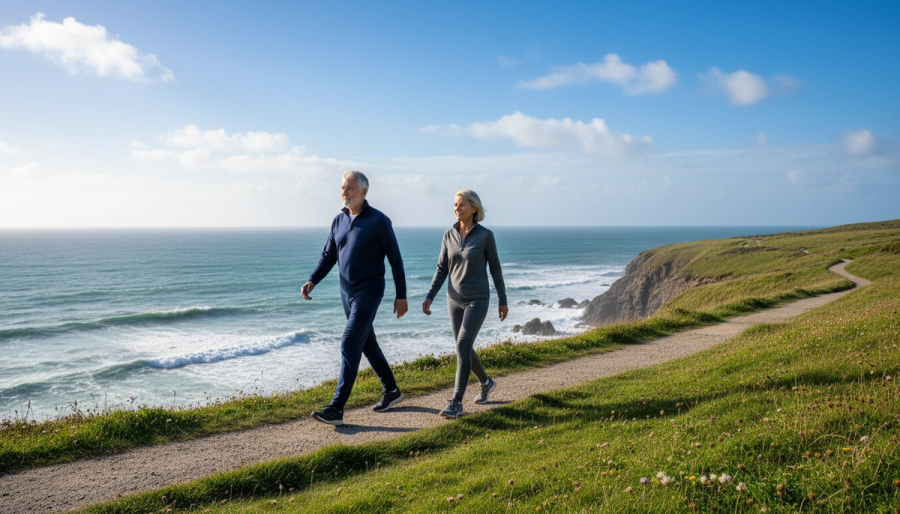
If you could take one pill that reduced your risk of heart disease, improved your mood, strengthened your bones, helped you sleep better, sharpened your memory, and added years to your life — you'd take it. Walking 30 minutes a day does all of these things. And it's free.
For adults over 50, walking is arguably the single most impactful exercise you can do. It requires no gym, no equipment, no special skill, and virtually no injury risk. Yet the physiological benefits rival far more intense forms of exercise.
What Happens in Your Body
Cardiovascular system: Your heart rate increases to 100-120 beats per minute during a brisk walk, strengthening your heart muscle and improving circulation. Research from the American Heart Association found that walking 30 minutes a day, 5 days a week, may reduce heart disease risk by up to 19%.
Brain function: Walking increases blood flow to the brain and has been shown to stimulate the growth of new brain cells in the hippocampus — the region responsible for memory. A study in the Proceedings of the National Academy of Sciences found that walking increased hippocampal volume by 2% in older adults — effectively reversing 1-2 years of age-related shrinkage.
Bone density: Walking is a weight-bearing exercise, which means it stimulates bone formation and helps slow the loss of bone density that accelerates after 50. It's particularly important for the hips and spine.
Mood and mental health: Walking triggers the release of endorphins and serotonin — your body's natural mood elevators. Multiple studies have found that a daily walk may be as effective as medication for mild to moderate depression.
Sleep quality: Research in the journal Sleep Health found that older adults who walked regularly fell asleep faster, slept longer, and reported better sleep quality than sedentary peers.
How to Get the Most from Your Walk
Pace matters: Aim for a 'brisk' pace — one where you can talk but would struggle to sing. This is typically 3-4 miles per hour. Walk with purpose — not a stroll, but not a race. Consistency beats intensity: Walking 30 minutes every day provides far more benefit than an hour-long walk once a week. Build the habit first, then increase intensity. Add variety: Walk hills for extra leg strength. Try intervals — alternate 2 minutes of fast walking with 2 minutes of moderate pace. Walk on different surfaces to challenge your balance.
Supporting Your Walking Routine
Proper nutrition supports recovery and energy for daily walking. Joint comfort is important too — especially for the knees and hips that bear your body weight with every step.
Nopalea from TriVita may support joint comfort and flexibility for daily walkers — its anti-inflammatory properties from Nopal cactus fruit were shown in clinical studies to may enhance mobility and range of motion.